Custom Car Key Guides
Custom Painted Car Key Buyer Guide for First Time Orders
Jun
The first custom painted car key order should feel simple. Not careless, not rushed, but simple. The buyer should know what is being customized, what is not included, what information is needed, and what kind of finish will still look good after the novelty wears off.
If you are ordering for the first time, the biggest mistake is trying to solve every design idea at once. A custom key is a small object. It rewards a clear brief. The better first order usually starts with a matching selected shell style, one main finish, one optional accent, and a realistic understanding that this is a cosmetic painted shell product rather than a full replacement key service.
Step One: Decide Whether This Product Matches Your Goal
Use Custom Car Key when your working key already exists and your goal is to make the shell feel more personal. That might mean a cleaner daily-carry finish, a sporty accent, a subtle two-tone style, or a gift that feels more thoughtful than a generic accessory.
Do not use a painted shell order as a shortcut for a lost key, broken electronics, key cutting, immobilizer pairing, or dealership replacement. Those are different problems. If the key does not already work, solve function first. Paint should come after the key itself is the right object to customize.
Step Two: Check The Shell Before You Choose The Color
Color is more fun than compatibility, so people naturally want to start there. Resist that for a minute. First compare the shell style, button layout, side shape, and back cover. If you are shopping for a selected compatible style, read that phrase as a compatibility clue, not a universal guarantee.
If the shell looks close but not identical, ask support before checkout. Send real photos rather than only naming the vehicle model. Photos reduce guessing. They also help with design placement because a stripe, accent, or initials mark may need to avoid buttons, seams, and edges.
Step Three: Write A Brief That A Real Person Can Review
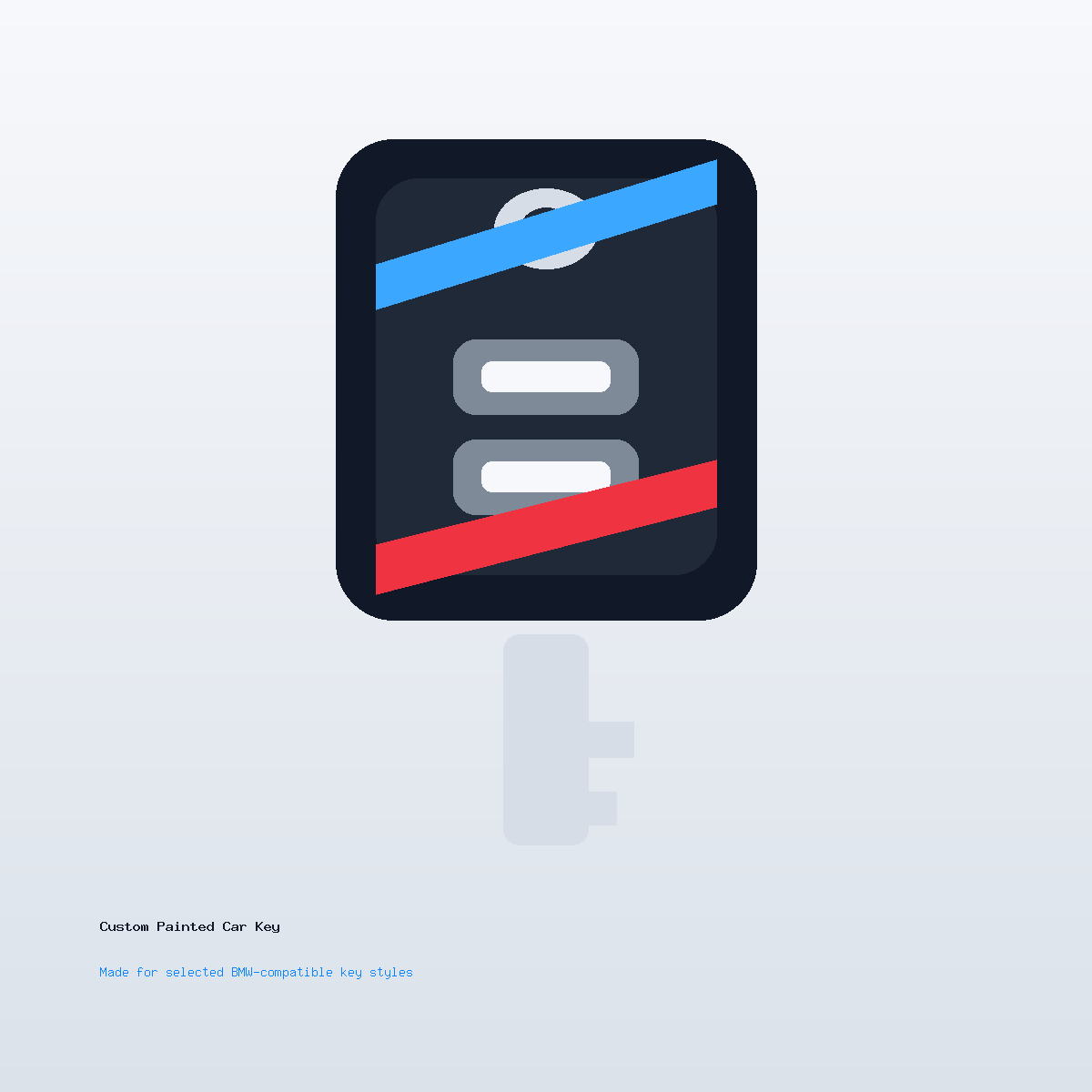
A good brief is not a long paragraph. It is a compact set of decisions. For example: “Gloss black base, dark red side accent, no text, sporty but clean.” Or: “Satin silver finish, small initials on the back, keep it subtle.” These notes are specific enough to review and flexible enough to work on a small shell.
Reference images can help, but they should not replace words. A reference image might show mood, contrast, or color family. Your note should still say what part matters. Is it the black-and-red contrast? The satin finish? The small text placement? The clean luxury feel? Say that plainly.
Step Four: Understand The Starting Price
The product currently starts from $99 for the custom painted key shell offer. Read that price as the starting point for the painted finish on selected compatible styles. It does not mean every possible artwork request, exact vehicle paint match, replacement-key work, or complex service is included.
If your request is simple, the base offer may be enough. If your request depends on complicated artwork, exact matching, unusual placement, uncertain compatibility, or a deadline, ask first. A short question before ordering is part of making a custom product go smoothly.
Step Five: Check Timing And Policy Before It Matters
Custom work has more moving parts than a ready-to-ship accessory. If the key is a gift, check shipping details before assuming the date will work. If the fit is uncertain or the design is highly personal, read the returns policy before checkout. None of this is meant to make the order feel scary. It is meant to keep the decision honest.
The best first-time buyers are not the ones with the biggest idea. They are the ones who can say what matters most. They know whether the goal is subtle, sporty, premium, personal, or gift-ready. They can send photos when needed. They understand that custom paint is a finish decision, not a key-service replacement.
A Practical First Order Example
Here is a strong first-order brief: “I want a clean everyday key. My current key is attached in the photos. I like gloss black with one blue accent near the side, no logo, no large artwork. If the shell is not a match, please let me know before production.” That note gives support enough to review fit, design, and expectation without guessing.
Here is a weak brief: “Make it look like my car and add something cool.” That may sound exciting, but it leaves too much open. What color? What finish? What part of the car? Should it be loud or subtle? Is artwork allowed to be simplified? A vague custom order creates more risk than a simple one.
When you are ready, start with the Custom Painted Car Key product page. If compatibility, artwork, timing, or scope is unclear, use contact support before checkout. That one extra step can save the whole order from becoming a guessing game.
First Order Questions
What should I prepare before ordering?
Prepare clear key photos, a base color, a finish direction, any accent idea, and one short note about the style you want. If timing matters, check shipping first.
Is the $99 price for a full replacement key?
No. It is for the custom painted key shell offer on selected compatible styles. Programming, cutting, lost-key replacement, and electronic services are separate issues outside this product.
What if I do not know whether my key matches?
Ask before checkout. Send front, back, side, and button-area photos. It is better to review fit before discussing paint details.
What kind of first design is safest?
A clean base finish with one accent is usually safest. It looks intentional, is easier to review, and works better on a small object than an overloaded design.
